It still tastes like yesterday








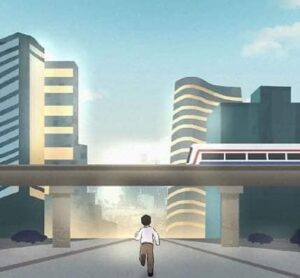
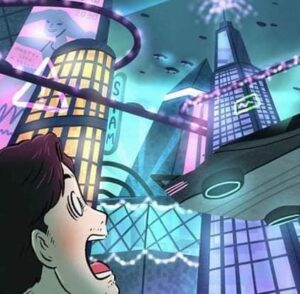
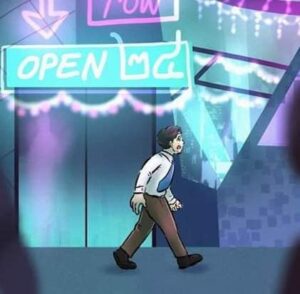
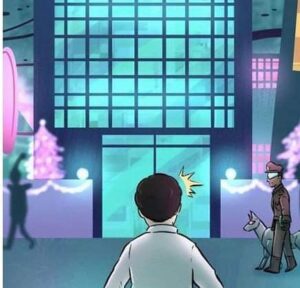






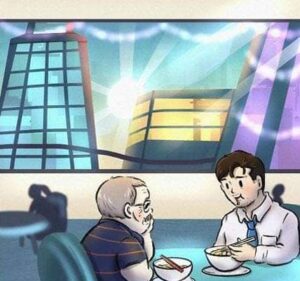

Here is the complete sequence and what actually happens (major spoilers):
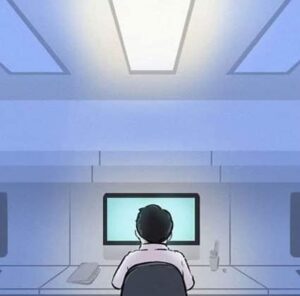
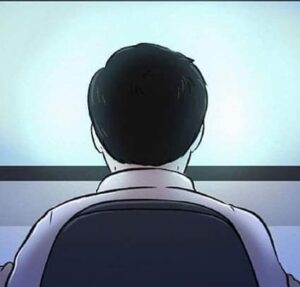
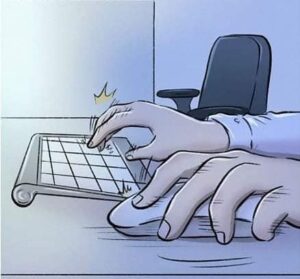
The salaryman is already extremely overworked, staying late every night, sleeping at his desk.
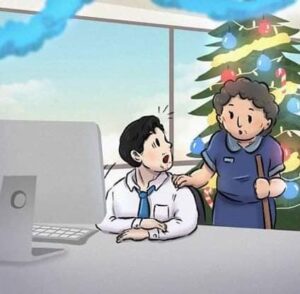
Christmas season comes → office decorates, but he barely notices.
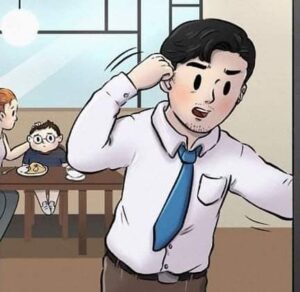
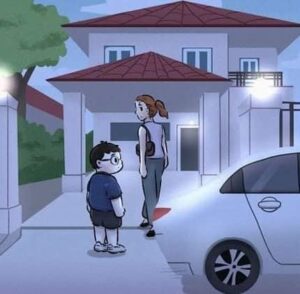
One night he comes home very late. His wife and little son are waiting for him at the gate, but he’s too exhausted to really interact.
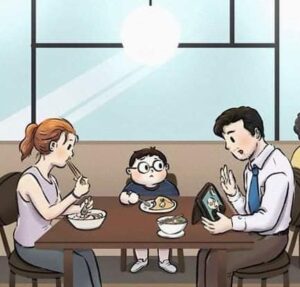
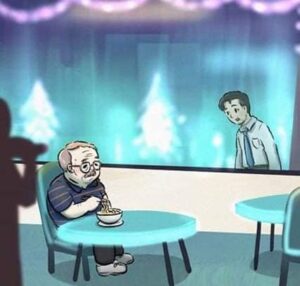
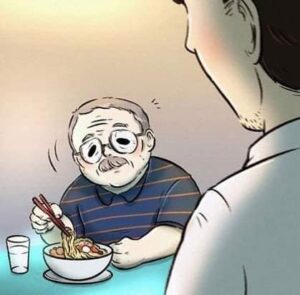
He keeps working insane hours. His elderly father visits him at home and he absent-mindedly feeds his dad noodles while staring at his phone/laptop.
Father looks sad because his son has no time for him anymore.
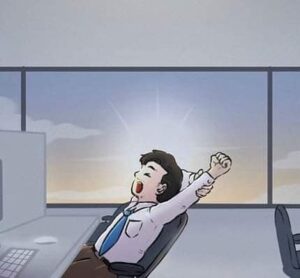
Salaryman keeps pulling all-nighters. One morning he wakes up at his desk feeling amazing — sunlight, stretching, happy — but it’s actually a hallucination/daydream.
Reality: he is still at the office, completely burned out, eyes empty.
One day he suddenly collapses from karoshi (heart attack/stroke caused by overwork).
Colleagues find him dead at his desk. His soul/spirit watches them carry his body away.
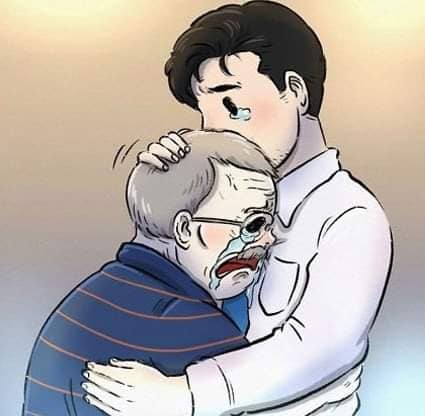
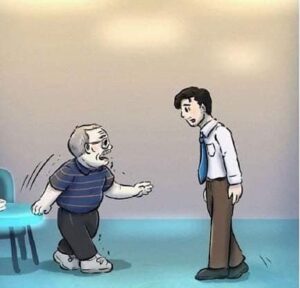
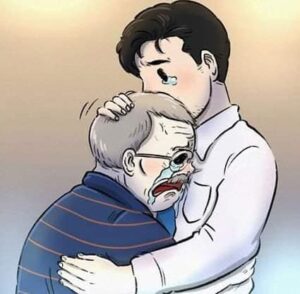
His father is told the news and breaks down crying.
At home, his wife and son are devastated.
Time passes. The company has replaced him within days. Life moves on for everyone else.
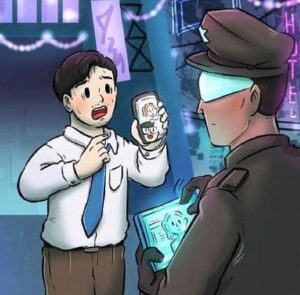
The twist: the company he worked for sells holographic AI replicas of deceased loved ones (a common trope in cyberpunk dystopias).
His wife, unable to move on, buys a holographic AI version of her dead husband.
The hologram acts exactly like him, has all his memories up to the day he died, says the things he used to say, but it’s just an AI projection.
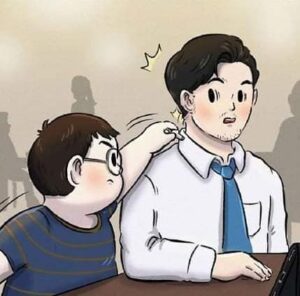
The little boy quickly realizes “daddy” is now just a hologram (he can literally put his hand through him).
The boy is terrified and traumatized.
The wife is in denial and keeps living with the hologram.
Years later the boy grows up hating the hologram and everything it represents.
Final panels (the most infamous ones):
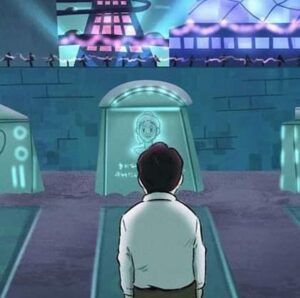
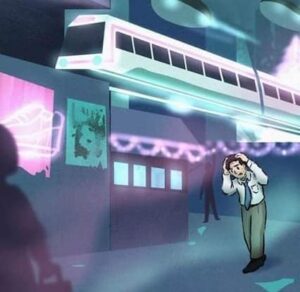
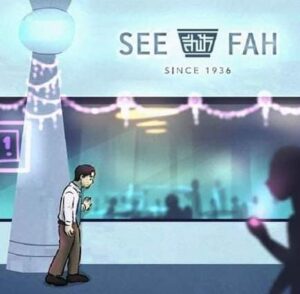
Adult son walks through the neon city.
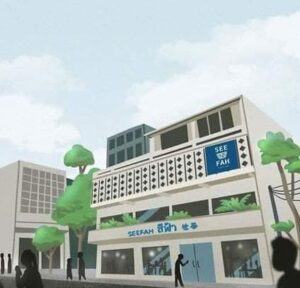
He passes a store called “SEE FAH” selling holographic AIs of deceased people.
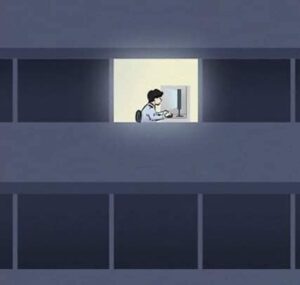
He looks up at a giant office building at night.
One single window is lit — someone else is pulling an all-nighter.
The cycle continues.
The comic is an extremely bleak critique of hustle culture, karoshi, the commodification of grief, and how corporations would even monetize death in a cyberpunk future. It went mega-viral in Asia (especially Singapore, Malaysia, Indonesia, Thailand) because many people felt personally attacked by how accurately it portrayed modern work life leading to total destruction of family and self.
That’s why the images hit so hard when you see them out of order — even without text, the story is devastatingly clear once you know the full context.2.7sFast